

Slips & Trips
Overview Of Management & Colleague Responsibilities
Manager Responsibilities Below is an overview of the responsibilities which is intended to support managers in identifying their key duties that need to be taken to comply with the requirements of this document and the safety management systems of the National Ice Centre.
- Managers need to ensure that any work environment has considered the potential slip & trip hazards that may be present and where they present a likely risk of injury, have been appropriately assessed and remedial action has been implemented.
- Managers need to inform colleagues and others of any identified slip and trip issues that may be present within the working environment and share the content of any assessments with those colleagues who may encounter that location / environment.
- Managers must implement an appropriate monitoring system to monitor any cases of slip and trip incident, especially if there is an increase in incident within a specific location.
- Mangers need to identify the housekeeping arrangements minimise potential incidents from occurring.
- Managers must ensure the environmental conditions which may present an additional risk are identified and ensure that those risks are considered within the assessment process.
Employee Responsibilities
The Health & Safety at Work Act 1974 section 7 requires all employees to consider their own health & safety and the safety of others.
As an employee of the National Ice Centre, if you have concerns in relation to health & safety that is likely to cause you or someone else, injury or ill health then you must ensure that the concern is communicated to your manager immediately.
You are also required to co-operate with the management of the National Ice Centre to ensure compliance with the health & safety arrangements, policies and procedures and work to the requirements identified within this document.
All colleagues can help reduce slips and trips from occurring by being vigilant and removing or reporting any slip or trip hazards that are present to their manager.
If the hazard can be removed safely then this should be done.
Factors such as environmental conditions that may give rise to slip or trip accidents must also be considered and concerns can also be fed back to managers for action and may include changing work patterns or practices.
Introduction
Date: October 2023
Issue: No. 5
Subject: Slips,Trips & Falls
This document forms part of the National Ice Centre’s organisational written safety policy arrangements.
Departments, services or teams may consider it appropriate to develop additional guidance and systems of work on specific work related activities.
Where proposals, additional guidance or changes to systems of work will have an impact on health, safety and welfare, this will be discussed and agreed at the Health & Safety Committee.
If you have any questions or require further information or support on the contents of this document, please contact the NIC Health & Safety Advisor or Corporate Safety Advice.
Why Slips & Trips Are A Concern
The Health & Safety Executive (HSE) has identified that over a third of all major injuries reported each year under the Reporting of Injury, Diseases and Dangerous Occurrences Regulations 2013 (RIDDOR) relate to a slip or trip incident.
Managers need to understand that this type of incident is the single most common cause of injury within the workplace and has significant cost and resource implications to organisations including the council both in terms of time off and any subsequent insurance claims.
Slips and trips also account for over half of all reported injuries that occur to members of the public.
 The HSE and Local Authorities have included this topic in their programmes of work designed to achieve national targets set to improve health and safety performance.
Vigilant managers and colleagues can effectively reduce slip and trip hazards through effective safety arrangements.
Most solutions for slip and trip hazards are often simple, cheap and easy to implement with little impact on the work being undertaken.
In most working environments, the most common cause of accident relates to slips and trips.
It is also recognised that colleagues do not report all slip and trip incidents and a percentage of this type of incident is not reported or recorded on the incident management system.
How To Prevent Slips & Trip Incidents
It is essential that managers implement a robust approach within their workplace in place to help spot problematic areas which may include:
- Identifying risk areas
- Setting improvement targets
- Utilising equipment and work practices which can help prevent hazards
- Training employees to understand the risks
- Keeping records of cleaning and maintenance work
- Having clear lines of responsibility for maintaining housekeeping standards
- Looking at accident reports and discussing them at team meetings / safety committee meetings
The Health & Safety Leaflet INDG 225 ‘Preventing Slips and Trips at Work’ gives information on how to manage slip, trip and fall hazards.
This information follows the principles laid down by the HSE Guidance document – HSG 65 ‘Managing for Health & Safety’ that asks employers to consider the following matters:
- What slip and trip hazards may be present
- Who will they affect
- What controls are required
- Monitoring improvements
It is important that managers consider known potential ‘slips and trips’ risks as part of any induction process and the all staff have a part to play in reducing this type of accident from occurring.
Information should be given to all employees on what actions to take should they encounter a slip or trip hazard that cannot be managed.
Risk Assessments
Where the risk can not be addressed immediately, management will need to ensure that a suitable risk assessment has been completed and any other actions required to reduce or remove the risk should be identified and taken where reasonably practicable.
Managers can find further information on the completion of risk assessments can be found within the Safety Manual SPA – ‘Risk Assessment – A Guide for Managers’ and SPA – ‘Management of Health & Safety’.
Managers need to ensure that when a slip or trip accident occur, this information is considered within the relevant risk assessments and further controls that may be required are identified.
Practical Measures
Managers and colleagues need to work together to identify and remove any potential slip and trip hazards that may be present within the working environment.
Where the hazard can be removed then that action should be taken immediately.
Where it is not possible to remove the hazard, action must be considered and taken to reduce the risk of an accident occurring.
The HSE gives guidance on potential hazards and their possible controls which is identified in the document Practical Measures to Reduce Slip & Trip Incidents.
Signs & Barriers
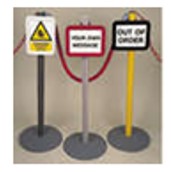 Managers can utilise signs to warn people in the vicinity of a slip or trip hazard. Barriers, both temporary and permanent, can also be used to prevent access to the area where the trip hazard is present.
Managers need to ensure that permanent barriers are not be used on emergency escape routes.
If this is required, the emergency route must be considered and changed accordingly
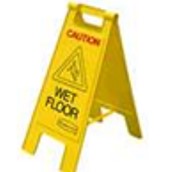 Signs such as the slippery floor sign must always be considered as a last resort to identify a temporary problem area and actions should be identified that address the issue and subsequently remove the need for the signs to be present